Introduction
Microchip integrated circuits (ICs) form the technological backbone of modern OEM manufacturing, powering everything from automotive safety systems and industrial automation equipment to consumer electronics and IoT devices. For procurement managers, the right IC supplier partnership determines whether production lines run smoothly or grind to a halt during supply disruptions—a lesson learned painfully during recent global chip shortages.
As we move through 2026, the semiconductor landscape has shifted significantly. According to industry forecasts, the global semiconductor market will reach US$975 billion in annual sales this year, driven primarily by explosive AI chip demand.
However, OEMs in automotive, industrial, and consumer sectors face a different reality: steady growth with persistent capacity constraints, particularly for mature-node analog and microcontroller ICs. This creates zero-sum competition for foundry capacity, making supplier selection more strategic than ever. Success requires partners who deliver supply chain resilience, technical expertise, long-term product availability, and industry certifications—not just competitive pricing.
TL;DR
- Microchip ICs power all modern electronics - microcontrollers, processors, memory, and power management are essential building blocks
- Quality certifications, supply chain resilience, and technical support matter as much as unit pricing
- Automotive semiconductor demand will nearly double by 2030 despite mature-node capacity constraints
- Look for owned fabs and automotive certifications plus comprehensive design resources and technical support
- Strategic distributors provide critical supply chain flexibility alongside direct manufacturer relationships
Overview of Microchip ICs in OEM Manufacturing
Microchip integrated circuits are the fundamental building blocks of electronic devices, including microcontrollers, processors, memory chips, power management ICs, and specialized application-specific circuits. Each component serves distinct functions: microcontrollers execute embedded software, processors handle complex computations, and memory chips store critical data.
These components enable everything from engine control units in vehicles to motor drives in industrial robots.
The global semiconductor market is experiencing bifurcated growth in 2026. While AI-related chips drive headline numbers toward US$975 billion in annual sales, traditional OEM sectors face different dynamics. The automotive semiconductor market alone is projected to grow from US$68 billion in 2024 to US$132 billion by 2030, fueled by electrification and advanced driver assistance systems (ADAS). Industrial, medical, and consumer electronics OEMs similarly depend on reliable IC supply for both new product development and ongoing mass production.
This growth comes with supply chain challenges. Average IC lead times have improved—analog ICs decreased by approximately 18% from 2023 to 2024—but industry experts warn of a potential mature-node capacity crunch by late 2025 or early 2026 as foundries prioritize advanced process nodes for AI chips.
Supplier selection has become increasingly critical. OEMs need partners who deliver:
- Guaranteed capacity allocation across product lifecycles
- Automotive-grade and industrial-grade certifications
- Long-term product availability commitments
- Technical support for design-in and production phases
The suppliers profiled below excel in these areas, offering OEMs the reliability and breadth needed for 2026 and beyond.
Top 10 Microchip IC Suppliers for OEMs in 2026
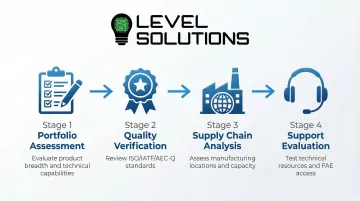
These suppliers were evaluated based on product portfolio diversity, manufacturing capabilities, supply chain resilience, quality certifications (ISO, IATF 16949, ISO 26262), technical support quality, global distribution networks, and feedback from OEM engineers and procurement professionals.
Intel Corporation
Intel maintains a strong position as a leading semiconductor manufacturer with comprehensive offerings in processors, FPGAs (following their Altera acquisition), and expanding automotive and IoT portfolios.
Ranked #3 in overall semiconductor revenue in 2024 with 7.6% market share, Intel operates major owned fabrication facilities in Arizona, Oregon, and New Mexico, plus international locations.
Intel's key differentiators include:
- Cutting-edge process technology with their 18A node attracting major design wins
- Comprehensive automotive-grade product lines with extensive technical documentation
- Established supply chain with multiple fab locations providing geographic redundancy
- Aggressive expansion of Intel Foundry services for U.S.-based manufacturing
Their foundry services position them to support automotive and industrial OEMs seeking supply chain resilience.
| Category | Details |
|---|---|
| Product Strengths | Processors (x86, Core, Xeon), FPGAs (Altera), automotive ICs, memory solutions, AI accelerators, foundry services |
| Manufacturing & Quality | Advanced process nodes (Intel 3, Intel 4, 18A), ISO/TS 16949 automotive certification, rigorous quality standards, multiple owned fabs |
| Supply Chain & Support | Global distribution network, comprehensive technical support, design tools and reference designs, foundry services for custom silicon |
Texas Instruments (TI)
Texas Instruments offers an extensive portfolio of analog and embedded processing solutions serving OEMs across industrial, automotive, and consumer markets. TI retained the #1 position in analog and mixed-signal semiconductors in 2023 and 2024, with a product catalog exceeding 80,000 parts.
The company is known industry-wide for long product lifecycles (10-20+ years) and design stability—critical factors for OEMs with multi-year product roadmaps.
TI's differentiators include:
- Industry-leading analog IC expertise spanning power management, data conversion, and signal conditioning
- Exceptional technical documentation with comprehensive datasheets, application notes, and reference designs
- Strategic commitment to vertical integration with over 95% internal manufacturing
TI secured $1.6 billion in CHIPS Act funding to support three new 300mm fabs in Utah and Texas, ensuring long-term supply control.
| Category | Details |
|---|---|
| Product Strengths | Analog ICs (amplifiers, data converters, interface), power management, microcontrollers (MSP430, C2000), processors, sensors, RF components |
| Manufacturing & Quality | Owned manufacturing facilities (300mm fabs), automotive AEC-Q qualified parts, industrial-grade reliability, ISO 9001, IATF 16949 |
| Supply Chain & Support | Extensive authorized distributor network, industry-best technical support, free samples and development tools, long product lifecycles |
NXP Semiconductors
NXP leads in automotive and secure connectivity solutions, offering microcontrollers, processors, and automotive-grade ICs that power vehicle electrification and ADAS applications. Ranked #2 in automotive microcontrollers in 2024 with 10.4% market share, NXP is integral to software-defined vehicle architectures and secure vehicle network processors.
NXP's differentiators include:
- Dominant automotive market share across multiple product categories
- Expertise in secure elements and NFC technology for payment and authentication applications
- Strong IoT and industrial portfolio with proven track record in safety-critical applications
All manufacturing centers maintain ISO 9001 certification, automotive business units hold IATF 16949 certification, and development processes are certified for ISO 26262 up to ASIL D—the highest automotive functional safety level.
| Category | Details |
|---|---|
| Product Strengths | Automotive MCUs (S32 platform), secure elements, processors (i.MX), RF/connectivity ICs, power management, ADAS solutions |
| Manufacturing & Quality | ISO 26262 functional safety (ASIL D), AEC-Q qualified, ISO 21434 cybersecurity, secure manufacturing for cryptographic elements |
| Supply Chain & Support | Automotive-focused supply chain management, global support teams, comprehensive development ecosystems, front-end fabs in U.S. and Netherlands |
STMicroelectronics
STMicroelectronics offers a broad IC portfolio spanning automotive, industrial, and consumer applications, with particular strength in microcontrollers, power semiconductors, and MEMS sensors. Ranked **#3 in automotive microcontrollers** in 2024 with 8.8% market share, ST serves diverse OEM needs across multiple verticals.
ST's differentiators include:
- Vertically integrated manufacturing capabilities covering analog, digital, and MEMS technologies
- Strong automotive and industrial presence with comprehensive electrification solutions
- Energy-efficient product designs optimized for battery-powered and low-power applications
- Comprehensive STM32 microcontroller ecosystem with extensive community support, free development tools (STM32Cube), and thousands of reference designs
ST is heavily investing in Silicon Carbide (SiC) capacity to support EV powertrain applications.
| Category | Details |
|---|---|
| Product Strengths | MCUs (STM32 family - 32-bit ARM), power management, MEMS sensors (accelerometers, gyroscopes), automotive ICs, motor control, SiC MOSFETs |
| Manufacturing & Quality | Multiple owned fabs, automotive (IATF 16949) and industrial certifications, MEMS manufacturing expertise, ISO 9001 |
| Supply Chain & Support | Global distribution network, strong online community and forums, free development tools, local field applications engineers (FAEs) |
Infineon Technologies
Infineon holds leadership positions in automotive semiconductors and power management solutions, with particular focus on automotive electrification, autonomous driving, and industrial power applications. Ranked #1 in automotive semiconductors in 2024 with 13.4% market share and #1 in power discretes and modules, Infineon is essential for OEMs transitioning to electric vehicles and renewable energy systems.
Infineon's differentiators include:
- Global leadership in automotive semiconductors across multiple categories (MCUs, power, sensors)
- Expertise in power semiconductors (MOSFETs, IGBTs, SiC) critical for EV inverters and charging systems
- Strong security IC portfolio for automotive cybersecurity and secure elements
- Proven reliability in safety-critical automotive systems
Products and processes are certified for ISO 26262 functional safety, and the company recently expanded its Dresden fabrication plant to strengthen long-term supply capacity.
| Category | Details |
|---|---|
| Product Strengths | Automotive ICs (AURIX MCUs), power semiconductors (SiC, IGBT, MOSFET), security ICs (OPTIGA), microcontrollers, radar sensors |
| Manufacturing & Quality | ISO/TS 16949, ISO 26262 functional safety, zero-defect mindset, advanced power semiconductor fabs, expanded Dresden facility |
| Supply Chain & Support | Automotive-grade supply chain management, global technical support centers, application engineering teams, comprehensive development tools |
Analog Devices (ADI)
Analog Devices specializes in high-performance analog, mixed-signal, and digital signal processing ICs serving industrial, automotive, and communications OEMs. ADI is recognized for precision measurement and signal processing capabilities that enable advanced sensor interfacing, data acquisition, and signal conditioning applications.
ADI's differentiators include:
- Industry-leading analog and mixed-signal technology with best-in-class specifications for precision, noise, and power efficiency
- Strong industrial and automotive focus with products designed for harsh environments
- Comprehensive power management and data conversion solutions including high-resolution ADCs and DACs
- Reputation for technical excellence with exceptional application support
The company holds certifications including ISO 9001, IATF 16949, AS9100D (aerospace), and ISO 26262 for functional safety.
| Category | Details |
|---|---|
| Product Strengths | Analog ICs (precision amplifiers, references), data converters (ADCs, DACs), power management, RF ICs, DSPs, automotive battery management systems |
| Manufacturing & Quality | High-reliability manufacturing, automotive AEC-Q qualified products, industrial-grade temperature ranges, comprehensive certifications |
| Supply Chain & Support | Global authorized distribution partners, exceptional applications engineering support, design tools and simulators, extensive technical documentation |
Microchip Technology
Microchip Technology offers a comprehensive portfolio of microcontrollers, analog ICs, and connectivity solutions, with acquisitions of Atmel and Microsemi significantly expanding their product breadth. As a top ten automotive semiconductor supplier and the largest domestic U.S. microcontroller supplier, Microchip serves OEMs across automotive, industrial, aerospace, and consumer markets.
Microchip's differentiators include:
- Extensive 8/16/32-bit MCU families (PIC, AVR, SAM) covering applications from simple control to complex embedded systems
- Strong automotive and industrial presence with AEC-Q qualified and industrial-grade products
- Integrated development tools through the comprehensive MPLAB ecosystem
- Customer-focused approach featuring responsive technical support, local field applications engineers, and extremely long product lifecycles
The company operates 6 high-volume and 14 specialty factories with a "client-owned" tooling model that reduces obsolescence risk. Their PolarFire SoC FPGAs recently achieved AEC-Q100 Grade 1 qualification.
| Category | Details |
|---|---|
| Product Strengths | Microcontrollers (PIC, AVR, SAM), analog ICs, FPGAs (PolarFire), connectivity solutions, timing and synchronization, motor control |
| Manufacturing & Quality | Owned fabs and test facilities (U.S., Thailand, Philippines), automotive AEC-Q qualified, ISO 9001, IATF 16949, AS9100 (aerospace) |
| Supply Chain & Support | Global manufacturing footprint, strong distributor relationships, comprehensive development tools (MPLAB X IDE), long product lifecycles |
Renesas Electronics
Renesas maintains a strong position as an automotive semiconductor supplier with comprehensive MCU and SoC portfolios. Ranked #5 in automotive microcontrollers in 2024 with 6.8% market share, Renesas focuses on automotive electrification, ADAS, and industrial automation applications.
Renesas' differentiators include:
- Comprehensive automotive MCU and SoC lineup spanning entry-level to high-performance applications
- Proven track record in automotive functional safety with products certified to stringent standards
- Strong presence in industrial and IoT markets with solutions for factory automation and smart infrastructure
- Integrated solutions approach combining MCUs with power management and analog peripherals
The company expanded strategic collaboration with GlobalFoundries in 2026 to secure capacity in the U.S., Germany, and Singapore, demonstrating commitment to supply chain resilience.
| Category | Details |
|---|---|
| Product Strengths | Automotive MCUs/SoCs (RH850, R-Car), power management ICs, analog ICs, motor control solutions, industrial MCUs (RA, RX families) |
| Manufacturing & Quality | ISO 26262 ASIL-D certified products, automotive-grade manufacturing, stringent quality processes, hybrid manufacturing model |
| Supply Chain & Support | Automotive-focused supply chain, global support network, reference designs and solution kits, expanded foundry partnerships |
ON Semiconductor (onsemi)
onsemi focuses on intelligent power and sensing technologies for automotive and industrial OEMs, with particular strength in image sensors, power semiconductors, and automotive solutions. The company holds 46% automotive market share in image sensors and is heavily investing in end-to-end Silicon Carbide (SiC) supply chain capabilities.
onsemi's differentiators include:
- Leadership in automotive image sensors for ADAS and autonomous driving applications
- Comprehensive silicon carbide (SiC) portfolio for EV inverters, onboard chargers, and DC-DC converters
- Integrated intelligent power modules combining multiple functions
- Sustainability-focused manufacturing practices
The company operates 19 manufacturing sites globally and holds certifications including ISO 9001, IATF 16949, ISO 26262, and AS9100 for aerospace applications.
| Category | Details |
|---|---|
| Product Strengths | Image sensors (automotive CMOS), power semiconductors (SiC, IGBT, MOSFET), automotive ICs, intelligent power modules, motor drivers |
| Manufacturing & Quality | Automotive IATF 16949, ISO 26262 functional safety, AS9100 aerospace, advanced SiC manufacturing capabilities, 19 global sites |
| Supply Chain & Support | Global manufacturing and distribution network, automotive supply chain expertise, applications support teams, sustainability focus |
Broadcom Inc.
Broadcom leads in connectivity, networking, and broadband semiconductor solutions with dominant positions in wired and wireless connectivity ICs serving communications, enterprise, and industrial OEMs. Ranked #6 in overall semiconductor revenue in 2024 with 4.2% market share, Broadcom is critical for data center networking, custom AI accelerators, and automotive connectivity applications.
Broadcom's differentiators include dominant market position in wired and wireless connectivity technologies (Wi-Fi, Bluetooth, Ethernet) with deep integration into smartphones, routers, and enterprise equipment; high-performance networking ICs for switches, routers, and data center infrastructure; storage and fiber optic solutions for enterprise and cloud applications; and proven reliability in enterprise-grade applications. The company operates a fabless model using TSMC for wafers and partners like ASE and Amkor for assembly, with quality systems aligned to ISO 9001 and IATF 16949 certification for automotive-relevant sites.
| Category | Details |
|---|---|
| Product Strengths | Connectivity ICs (Wi-Fi 6/7, Bluetooth, Ethernet PHYs), networking processors and switches, storage controllers, fiber optic transceivers |
| Manufacturing & Quality | Fabless model with TSMC foundry partnership, ISO 9001 quality systems, IATF 16949 for automotive, enterprise-grade reliability standards |
| Supply Chain & Support | Global distribution network, comprehensive technical documentation and reference designs, partner ecosystem, custom silicon capabilities |
How We Chose the Best Microchip IC Suppliers
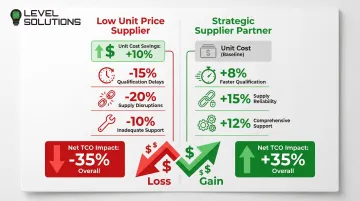
OEMs often make costly procurement mistakes by focusing exclusively on unit price or selecting suppliers based solely on brand recognition. These decisions overlook critical factors like supply chain resilience, technical support quality, lead time consistency, and total cost of ownership.
A supplier offering the lowest unit price may create far higher costs through qualification delays, supply disruptions, inadequate technical support, or premature product obsolescence.
Product Portfolio Breadth - Sourcing multiple IC types from a single supplier reduces procurement complexity, simplifies vendor management, shortens qualification cycles, and often provides volume pricing advantages. Suppliers offering comprehensive portfolios across analog, digital, power, and connectivity enable OEMs to consolidate their supply base.
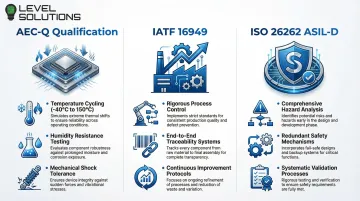
Industry-standard quality certifications ensure reliability and compliance with sector-specific requirements:
- ISO 9001 establishes baseline quality management systems
- IATF 16949 is mandatory for automotive Tier 1/2 suppliers
- ISO 26262 is required for functional safety-critical automotive systems, with ASIL ratings (A through D) indicating safety integrity levels
- AEC-Q100/Q200 qualification ensures automotive-grade components meet stress test requirements
- AS9100 certification is required for aerospace applications
Supply Chain Resilience - Owned manufacturing facilities provide greater supply control than fabless models relying entirely on foundry partners. Geographic diversity across fabs and assembly sites reduces regional disruption risks. Inventory management practices, including buffer stock programs and allocation policies during shortages, directly impact OEM production continuity. Despite improved lead times in 2024, 46% of automotive leaders remain extremely concerned about semiconductor supply continuity over the next five years.
Technical Support - Access to field applications engineers (FAEs), comprehensive design tools, detailed documentation, and reference designs accelerates product development and reduces time-to-market. The best suppliers provide not just components but complete solutions including software drivers, evaluation boards, and application notes that address common design challenges.
Lead Times and Availability - Consistent delivery performance and inventory depth enable production planning confidence. Flexibility during market disruptions—through allocation transparency, prioritization policies, and alternative product recommendations—separates strategic partners from transactional vendors. While analog IC lead times decreased approximately 18% from 2023 to 2024 and discrete power device lead times dropped by two-thirds, mature-node capacity constraints are anticipated by late 2025 or early 2026.
Beyond unit price, total cost of ownership includes qualification costs (engineering time, testing, certifications), supply risk costs (expedite fees, line-down penalties, safety stock carrying costs), and support value (reduced development time, fewer design iterations, faster issue resolution).
A supplier charging 10% more per unit but offering superior technical support and supply reliability often delivers lower total cost.
Successful OEMs often work with both direct manufacturer relationships for strategic, high-volume components AND strategic distributor partnerships that offer complementary capabilities.
Distributors with ESD-compliant warehousing, comprehensive manufacturer coverage, and millions of parts in stock provide immediate availability for low-volume components, support for legacy products, and supply chain flexibility during allocation periods. This approach creates a resilient, multi-tier sourcing strategy that balances direct relationships with flexible distribution partnerships.
Conclusion
Selecting the right IC supplier partners is a strategic decision that goes beyond transactional component purchasing. The best partnerships align with your product roadmap, support your engineering team throughout design cycles, and provide stability that protects your production schedules against market disruptions.
As the 2026 semiconductor landscape evolves—with AI chips consuming foundry capacity and mature-node constraints looming—these strategic relationships become increasingly valuable.
Evaluate suppliers using the holistic criteria outlined above:
- Long-term availability commitments beyond current product needs
- Technical support quality throughout design cycles
- Resilience during market disruptions and allocation periods
- Total cost of ownership including qualification and risk mitigation costs
The suppliers profiled here represent industry leaders across different specializations—from Texas Instruments' analog expertise and Infineon's automotive dominance to Intel's advanced process technology and Microchip's long lifecycle commitments.
For OEMs seeking to optimize their IC procurement strategy, consider partnering with a specialized electronic component procurement provider that complements your direct supplier relationships.
Key capabilities to look for include:
- Immediate access to millions of components from top manufacturers
- ESD-compliant warehousing that ensures component integrity
- Global sourcing capabilities that extend beyond single-vendor constraints
- Procurement expertise that provides critical resilience
Such partnerships enable faster response to unexpected demand, support for legacy products, and flexibility during allocation periods—creating a robust, multi-tier sourcing strategy that protects your business against disruptions.
Frequently Asked Questions
Where does Microchip Technology manufacture its ICs?
Microchip Technology operates wafer fabs in Tempe, Arizona (Fab 2), Gresham, Oregon (Fab 4), and Colorado Springs, Colorado (Fab 5). Assembly and test facilities span the US, Thailand, and the Philippines, with foundry partners providing additional capacity flexibility.
What is the typical lead time for ordering microchip ICs in bulk from suppliers?
Standard catalog parts from authorized distributor stock ship within days to weeks. Direct manufacturer orders for high-volume production typically range from 12-26 weeks, with automotive-grade and specialized ICs requiring longer cycles during capacity constraints.
How do OEMs ensure quality and authenticity when sourcing ICs from distributors?
Work with authorized distributors who provide manufacturer certificates of conformance, verify part markings and packaging against manufacturer specifications, and maintain traceability documentation. Distributors like LEVEL SOLUTIONS operate ESD-compliant warehouses and source directly from manufacturers to ensure authenticity across commercial and mil-spec components.