Introduction
Analog ICs bridge the physical and digital worlds in modern electronics, enabling everything from signal processing and power management to sensor interfacing across automotive, industrial, and communications applications.
As OEMs navigate 2026's increasingly complex supply chain landscape—marked by automotive electrification, industrial automation expansion, and persistent capacity constraints—selecting the right analog IC supplier has become a strategic imperative that extends far beyond component specifications.
The global analog IC market will reach $83.8 billion in 2026, growing toward $138.4 billion by 2034 at a CAGR of approximately 6.5%. This expansion stems from surging semiconductor content per electric vehicle and the rapid growth of IoT-connected devices.
For OEMs, this growth signals tightening capacity for high-performance components. Supplier relationships must deliver not just parts, but comprehensive ecosystem support, long-term availability commitments, and supply chain resilience.
TLDR
- Analog ICs enable critical functions across virtually all electronic systems, from automotive battery management to industrial sensor processing
- Top suppliers differentiate through application expertise: broad portfolios with competitive pricing, precision performance leadership, or automotive power dominance
- Match suppliers to your application needs—prioritize expertise, support quality, availability guarantees, and supply chain resilience
- Choose suppliers offering complete ecosystem support (reference designs, development tools) aligned with your vertical requirements
Overview of Analog ICs in the OEM Supply Chain
Analog integrated circuits process continuous signals—temperature, pressure, speed, voltage—and convert them into digital data while managing power distribution. They serve as the essential interface between physical sensors and digital processors in virtually every modern device.
The analog IC market was valued at $79.4 billion in 2025 and is forecast to grow to $83.8 billion in 2026, with projections reaching $138.4 billion by 2034.
This sustained expansion is driven by three primary forces:
- Automotive electrification – EVs require significantly higher semiconductor value than internal combustion vehicles
- Industrial automation – Factory operations advancing toward autonomous control systems
- IoT deployment – Billions of connected edge devices requiring sophisticated power management and signal conditioning
The supplier landscape for 2026 reflects both consolidation and specialization. While the top 10 suppliers account for the majority of global analog revenue, each has carved out distinct expertise areas—from Texas Instruments' unmatched portfolio breadth to Analog Devices' precision data conversion leadership and Infineon's dominance in automotive power semiconductors.
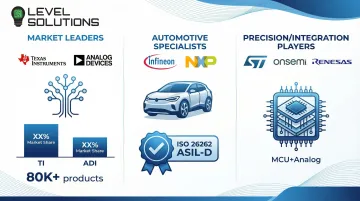
Below are the top 10 analog IC suppliers OEMs should consider for 2026, selected based on product portfolio depth, market presence, innovation trajectory, technical support quality, and demonstrated supply chain reliability.
Top 10 Analog Devices IC Suppliers for OEMs in 2026
This ranking prioritizes suppliers demonstrating product portfolio depth, application-specific expertise, supply chain resilience, technical support quality, and long-term commitment to analog technology—critical factors for OEMs planning designs that must remain in production for years or decades.
Texas Instruments (TI)
With analog revenue of $12.16 billion in 2024, Texas Instruments maintains its position as the largest analog IC supplier globally. The company's catalog exceeds 80,000 analog products spanning precision amplifiers, data converters, power management ICs, and complete signal chain solutions.
The broadest-in-industry product portfolio gives TI significant competitive advantage. Manufacturing scale enables aggressive pricing, while thousands of reference designs and simulation tools support rapid development.
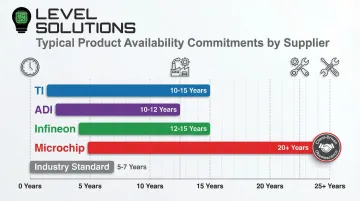
The company focuses heavily on industrial automation and automotive markets, with product lifecycles typically 10-15 years and often extending longer. TI commits to not obsoleting standard products that have had sales within the last five years (seven years for automotive-qualified parts).
| Key Strengths | Largest analog IC portfolio (80,000+ products), industry-leading operational efficiency through internal manufacturing, extensive online design tools and reference libraries || Primary Application Focus | Industrial automation, automotive systems, power management, precision measurement and data acquisition || Differentiators for OEMs | Competitive pricing through vertical integration, long product availability commitments (10-15+ years), comprehensive technical documentation and active design support community |
Analog Devices (ADI)
Analog Devices leads in high-performance analog, mixed-signal, and RF solutions, particularly excelling in precision applications requiring ultra-low noise and high accuracy. The 2021 acquisition of Maxim Integrated created a combined entity with over $9 billion in annual revenue and strengthened ADI's position in power management and automotive markets.
Industry-leading performance specifications in precision data converters and signal chain solutions set ADI apart. The company dominates automotive battery management systems (BMS) while maintaining an advanced RF portfolio serving 5G infrastructure.
ADI's Wireless BMS technology has achieved ISO/SAE 21434 CAL-4 cybersecurity certification, confirming readiness for secure EV architectures.
| Key Strengths | Highest performance precision analog solutions, market leader in automotive electrification (wireless BMS), advanced RF and 5G infrastructure products || Primary Application Focus | Automotive electrification and ADAS, industrial automation, aerospace/defense, 5G/6G communications infrastructure, precision instrumentation || Differentiators for OEMs | Superior performance specifications (noise, accuracy, temperature drift), wireless BMS technology with automotive cybersecurity certification, comprehensive system-level solutions with software support |
Infineon Technologies
The #1 position in the global automotive semiconductor market belongs to Infineon, with 13.5% market share in 2024. Power semiconductors and automotive-qualified analog ICs drive this leadership, particularly in automotive power management and safety-critical applications.
Key competitive advantages include:
- Top automotive semiconductor supplier position globally
- Extensive Silicon Carbide (SiC) and Gallium Nitride (GaN) power portfolio for EV traction inverters and onboard chargers
- Strong functional safety expertise with ISO 26262 ASIL-capable products
- Deep automotive ecosystem partnerships with major OEMs
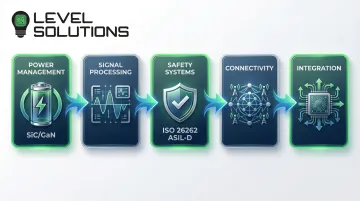
| Key Strengths | #1 automotive semiconductor supplier globally, comprehensive power management portfolio from low to high voltage, SiC and GaN technology leadership, strong safety and security capabilities || Primary Application Focus | Automotive powertrains and electrification, industrial power conversion and motor drives, renewable energy systems, ADAS and autonomous driving || Differentiators for OEMs | Automotive-grade reliability and AEC-Q100 qualification expertise, functional safety capabilities (ASIL-D), end-to-end power semiconductor portfolio including wide-bandgap devices |
STMicroelectronics (ST)
STMicroelectronics combines a diverse analog portfolio with microcontroller integration capabilities, creating highly integrated solutions particularly strong in smart power and motor control applications. ST operates as an Integrated Device Manufacturer (IDM) with internal 300mm fabs and SiC substrate production.
Analog and MCU expertise combine to enable system-level solutions that reduce component count and board space. Proprietary BCD (Bipolar-CMOS-DMOS) technology gives ST strong positions in industrial and automotive motor control.
Vertical integration delivers competitive pricing for high-volume applications.
| Key Strengths | Integrated analog + MCU solutions (particularly STM32 ecosystem), strong motor control and power management portfolio, vertically integrated manufacturing for supply assurance || Primary Application Focus | Motor control (industrial and automotive), smart power applications, consumer electronics, industrial sensors and actuators || Differentiators for OEMs | Analog-MCU integration reducing system complexity, competitive pricing for volume production, broad geographic manufacturing presence across Europe and Asia |
ON Semiconductor (onsemi)
A commanding 40%+ market share in automotive image sensors for ADAS positions onsemi uniquely in the intelligent power and sensing market. Strategic acquisitions have aggressively expanded SiC power device capabilities.
Automotive imaging leadership positions the company for the autonomous vehicle transition. Meanwhile, comprehensive intelligent sensing and growing SiC capabilities—including end-to-end substrate production through the GT Advanced Technologies acquisition—address EV power efficiency demands.
| Key Strengths | Leading automotive image sensor supplier (40%+ market share), comprehensive intelligent sensing portfolio, growing SiC power device capabilities with internal substrate production || Primary Application Focus | Automotive imaging and ADAS, industrial automation and robotics, power conversion for EVs and renewables, IoT edge sensing || Differentiators for OEMs | Advanced imaging technology for autonomous vehicles, integrated sensing and power solutions, focus on sustainability and efficiency (EliteSiC family) |
NXP Semiconductors
NXP dominates automotive and secure connectivity solutions, with particularly strong analog offerings in interface, power, and RF applications. The company's comprehensive automotive analog portfolio includes industry-standard CAN, LIN, FlexRay transceivers, and emerging automotive Ethernet solutions.
Leadership in automotive networking and interfaces provides core differentiation. Secure authentication solutions leverage NFC and identification heritage, while integrated analog + digital platforms simplify system design.
Deep relationships with automotive OEMs and Tier 1 suppliers globally strengthen NXP's market position.
| Key Strengths | Automotive connectivity leadership (CAN, LIN, Ethernet transceivers and switches), secure authentication and NFC solutions, integrated analog + digital platforms || Primary Application Focus | Automotive networking and interfaces, secure payment and authentication, industrial IoT connectivity, RF identification (RFID) || Differentiators for OEMs | Automotive-grade interface solutions with proven reliability, security-focused analog designs for authentication, comprehensive automotive ecosystem support and reference designs |
Renesas Electronics
Renesas strengthened its position as a leading automotive semiconductor supplier through the 2021 acquisition of Dialog Semiconductor, which significantly expanded its analog portfolio in power management, battery management, and low-power connectivity. This created "Winning Combinations" of embedded processing + analog + power.
Dialog's expertise in advanced power management IP and battery management solutions now complements Renesas' strong automotive MCU position. Tightly integrated MCU + analog platforms benefit from particularly strong relationships with Japanese automotive OEMs.
| Key Strengths | Strong automotive market presence (top-tier supplier), comprehensive power management portfolio (acquired from Dialog), integrated MCU + analog solutions || Primary Application Focus | Automotive powertrains and body electronics, industrial automation, power management for battery-powered devices, IoT edge applications || Differentiators for OEMs | Automotive-qualified analog solutions tightly integrated with Renesas MCU platforms, advanced power management IP from Dialog heritage, strong Japanese automotive OEM relationships |
Microchip Technology
Microchip offers a broad analog portfolio including data converters, interface products, and power management ICs, typically paired with their PIC and AVR microcontroller and MPU offerings to create complete embedded systems solutions.
Exceptional long-term product availability sets Microchip apart. The company's "Client-Driven Obsolescence" policy continues manufacturing as long as demand exists and capability remains.
This commitment often extends 20+ years. Industrial, aerospace, and medical applications requiring decades of supply assurance find Microchip ideal.
| Key Strengths | Integrated analog + MCU/MPU platforms, industry-leading product lifecycle support (20+ years typical), comprehensive design tool ecosystem (MPLAB) || Primary Application Focus | Industrial control systems, automotive electronics, aerospace and defense, medical devices requiring long-term support || Differentiators for OEMs | Exceptional long-term product availability (client-driven obsolescence policy), tightly integrated analog-MCU total system solutions, strong technical support and application engineering |
Maxim Integrated (now part of Analog Devices)
Analog Devices acquired Maxim Integrated in 2021, though distinct product lines in power management, interface, and sensor solutions continue. Maxim's heritage lies in highly integrated analog solutions that combine multiple functions in small-footprint packages.
Innovative, space-saving highly integrated analog ICs reduce component count significantly. Strong battery management and power optimization expertise serves portable devices, complemented by an extensive automotive-qualified portfolio.
The acquisition provides Maxim product lines with ADI's broader ecosystem support and technical resources.
| Key Strengths | Highly integrated analog solutions (multiple functions per chip), innovative packaging and size reduction technologies, strong battery management and power optimization || Primary Application Focus | Battery-powered devices and wearables, automotive electronics, industrial sensing, power optimization for portable applications || Differentiators for OEMs | Space-saving highly integrated designs reducing board space, low-power optimization expertise, now backed by ADI's broader technical support ecosystem and manufacturing scale |
Authorized Distributors: Arrow Electronics & Avnet
While manufacturers are critical, authorized distributors like Arrow Electronics and Avnet provide OEMs with multi-supplier access, inventory buffering, and supply chain flexibility that direct manufacturer relationships alone cannot deliver.
Global distributors deliver distinct advantages:
- Access to all major analog IC manufacturers' portfolios through a single relationship
- Buffer inventory that reduces lead times during capacity constraints
- Value-added services including kitting, programming, testing, and design support
- Global logistics and supply chain management expertise
For OEMs managing complex component procurement, specialized providers like LEVEL SOLUTIONS offer complementary capabilities through ESD-compliant warehousing and access to millions of immediately available components alongside global sourcing networks.
| Key Strengths | Multi-manufacturer portfolio access (100+ suppliers), inventory buffering and availability management, global logistics and supply chain services, technical design support || Primary Value for OEMs | Single-source procurement across multiple suppliers, reduced lead times through stocked inventory, supply chain risk mitigation through geographic diversity || Differentiators for OEMs | Ability to compare and source from multiple manufacturers through one relationship, value-added services (component testing, programming, kitting), market intelligence and component lifecycle management |
How We Chose the Best Analog IC Suppliers
OEMs often select analog IC suppliers based solely on brand recognition or lowest unit price. This approach overlooks critical factors like technical support quality, long-term product availability, application-specific expertise, and supply chain resilience.
A low-cost component that becomes obsolete in three years can cost far more than a premium part backed by comprehensive ecosystem support and decade-long availability commitments.
To help OEMs avoid costly mistakes, our evaluation focused on suppliers with proven capabilities across multiple dimensions:
- Product portfolio breadth across signal chain, power management, and interface categories
- Application-specific expertise including reference designs for automotive, industrial, and communications markets
- Technical support resources: simulation tools, evaluation boards, and application engineering assistance
- Long-term availability commitments with formal lifecycle policies extending 10-20+ years
- Supply chain reliability through IDM manufacturing or diversified foundry relationships
- Automotive and industrial qualifications: AEC-Q100, ISO 26262, and functional safety capabilities
- Innovation in emerging technologies like SiC/GaN power devices, wireless BMS, and edge AI-ready analog front-ends
- Ecosystem partnerships with development tool vendors, software providers, and industry consortia
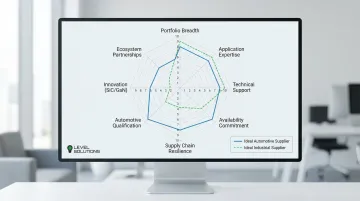
The optimal supplier choice depends heavily on your specific requirements. Cost-sensitive industrial applications may prioritize broad portfolios and competitive pricing, while precision instrumentation demands performance leadership.
Automotive electrification projects require suppliers with proven functional safety expertise, while long-lifecycle industrial control systems benefit from exceptional availability commitments extending decades.
Conclusion
Selecting the right analog IC supplier is a strategic decision extending far beyond component datasheets and unit pricing.
OEMs must evaluate suppliers based on their ability to support the entire product lifecycle—from initial design-in through production ramp and decades of field support. Today's supply chain landscape presents unique challenges: capacity constraints, technology transitions to wide-bandgap semiconductors, and rising automotive cybersecurity requirements.
When evaluating suppliers, prioritize these key factors:
- Application-specific expertise: Automotive electrification demands functional safety and AEC-Q100 qualification; industrial automation benefits from broad portfolios and competitive pricing; precision instrumentation requires performance leadership
- Technical support quality: Assess through trial engagements and review ecosystem resources including reference designs and development tools
- Relationship strategy: Balance direct manufacturer relationships for strategic designs with authorized distributor partnerships for supply chain flexibility
LEVEL SOLUTIONS offers global sourcing capabilities for analog ICs from all major manufacturers profiled in this guide. We maintain millions of components in stock in our ESD-compliant warehouse, with access to billions of parts from around the globe.
Our team helps OEMs navigate supplier selection, ensure component authenticity through authorized channels, and optimize supply chain resilience through diversified sourcing strategies. Whether you need precision data converters from ADI, automotive-qualified power management from Infineon, or long-lifecycle industrial analog ICs from Microchip, we provide the technical expertise and supply chain infrastructure to support your success.
Frequently Asked Questions
Who are analog devices distributors?
Authorized distributors include Arrow Electronics, Avnet, Digi-Key, Mouser, and specialized suppliers like LEVEL SOLUTIONS. These partners provide multi-manufacturer access, buffer inventory to reduce lead times, and value-added services including kitting, programming, and supply chain management.
What are the key differences between Texas Instruments and Analog Devices for OEM applications?
TI offers the broadest portfolio (80,000+ products) with competitive pricing ideal for cost-sensitive industrial and automotive applications requiring standard signal chain and power management. ADI specializes in high-performance precision analog with superior noise and accuracy specs for ultra-low drift converters, advanced RF, and wireless battery management systems.
How do OEMs ensure long-term availability of analog ICs?
Select suppliers with formal long-term availability programs (TI and Microchip offer 10-20+ year commitments). Partner with authorized distributors for buffer inventory and lifecycle management. Qualify pin-compatible alternatives from multiple suppliers during design to enable second-sourcing.
What should OEMs prioritize when selecting analog IC suppliers for automotive applications?
Prioritize suppliers with AEC-Q100 qualification, ISO 26262 functional safety capabilities, proven automotive track records, and long lifecycle commitments. Infineon, ADI, NXP, and Renesas excel in automotive requirements including ISO 21434 cybersecurity certification for safety-critical applications.
Are authorized distributors or direct manufacturer relationships better for analog IC procurement?
Most OEMs use a hybrid approach. Direct manufacturer relationships provide deep technical support and roadmap access for strategic components. Authorized distributors offer multi-supplier flexibility, faster inventory access during shortages, and supply chain risk mitigation for broader portfolio needs.
How is the analog IC supply chain evolving in 2026?
Key trends include geographic diversification for supply chain resilience, accelerating SiC and GaN adoption (projected at 60% of automotive power semiconductors by 2030), rising analog content from automotive electrification, and edge AI integration demanding sophisticated analog front-ends with higher bandwidth and precision.